Concussion

concussion posterFootball season is almost over. Only one game left. SuperBowl 50 between the Carolina Panthers and the Denver Broncos in California. Hopefully, a good game with a close finish. Meanwhile, the other players go home, catch up with family and friends and nurse injuries.

Brain injuries are the issue the movie Concussion, which stars Will Smith as Dr. Owalu. Dr. Owalu is a smart, inquisitive pathologist who discovers a pattern of serious brain injuries in former pro-football players. The premise of the movie is that football is a dangerous sport. The players may willingly sign up for the knee injuries, ankle fractures and other orthopedic problems, but the players are also at risk for traumatic brain injury due to repetitive brain trauma and may not be aware. The NFL is portrayed as a corporate entity that knew some of the retired players were displaying symptoms similar to dementia but covered it up to protect profits. Broadly, the big corporation is arrayed against a little guy willing to blow the whistle on a problem the corporation is well aware of.

The movie is slow going initially, but when Mike Webster (played by David Morse), a well-loved former Pittsburgh Steeler dies suddenly, the movie finds it footing. Mike Webster’s autopsy finding lead to the discovery of these traumatic brain injuries dubbed CTE (chronic traumatic encephalopathy). At first worried about the future of football, the NFL tries to silence Dr. Owalu. After all, dementia can’t be fixed with surgery, pills or some therapy. As one character says, “If even 10% of mothers don’t allow their sons to play football, it’s the end of pro-football.” But once another well-known player, a part of the NFL establishment commits suicide, the momentum shifts toward acknowledgement of the problem.

The NFL has made efforts to dig deeper into CTE and figure out a way to make the game safer. Who knows? These efforts may stumble on a way to diagnose dementia sooner, which may lead to treatments to slow or reverse the disease. It’s in the league’s best interest to do so. There’s less emphasis on big hits. There’s no eye rolling or other demeaning comments when a player is kept out due to a concussion. Better helmet design has received more funding. Today, news reports said Ken Stabler, former quarterback, died of colon cancer but his brain autopsy showed severe CTE. His family spoke about symptoms consistent with dementia Mr. Stabler showed in the past few years.

I don’t see football going away anytime soon, though. It’s a great game to watch, moves quickly, and provides a career for a fair number of athletes. I’ll be watching the big game Sunday and critiquing the commercials along with all the other fans. But it may be that if the number of suspected cases of CTE prove true, more mothers may say no to football.
 

Noah

Easter has come and gone. I find it interesting this year there were three movies with spiritual themes released around Easter — Son of God, Noah, and Heaven is For Real. I grew up watching The Ten Commandments with Charlton Heston playing Moses. The very best scene was the parting of the Red Sea. Impressive special effects for the time. My sisters and I would ooh and ahh.

This year, I went to see Noah. The movie tells the story of Noah, his family, and building the ark. The special effects were quite impressive, well beyond those of The Ten Commandments. And the movie answered questions I had wondered about when told the story in Bible class. How did he build an ark big enough to hold all these creatures? In the movie, he has supernatural help. How did he keep natural enemies apart? The species arrive together. Birds as one, insects as one (couldn’t live with bugs but I understand the need for them), reptiles as one, mammals as one. Imagine the noise. How did he keep them all quiet? Noah and his wife, a healer, developed an inhalational anesthetic that put the animals to sleep. Nitrous oxide might be the modern equivalent.

Epic movies have a villain. In The Ten Commandments, it was the Pharaoah and his army. In Noah, the villain is Tubal-cain, a descendant of Cain – a sociopath, thief, and someone not above murder to get his way. He raises an army for an unsuccessful attack on the ark though Tubal-cain manages to sneak aboard to set up the final battle between good and evil.

Noah is a man under pressure – from the knowledge of the planned attack, by the schisms in his family as the ark nears completion but, mostly, from the demands of God. While the family relationships depicted are artistic license, I hadn’t considered that aspect of the story before.

The world Noah inhabits is represented by the villain – one of violence and war, of not protecting the earth, of power used to take from, abuse and kill others. There are definite parallels to the present.

When the rains start and the floods follow and the people drown, Noah and his family must listen to the screams outside the ark before the sounds die away. It is not pretty.

The overarching message of the movie is to love one another and protect the earth. Perhaps, the changes in weather patterns, with greater droughts, floods, and harsh winters, and the greater numbers of species  endangered or dying out, added to the current climate of war and strife, is a prelude to a larger cataclysmic event that might result in man dying out. We would do well to heed the warning.

Flowers as Messengers

Tomorrow is Valentine’s Day. February 14. While Hallmark and others have taken the day and commercialized it to an inordinate degree, the day began as a festival of love in honor of Saint Valentine, a martyr in the Christian Church. During the Victorian era, hearts, flowers, and chocolate became associated with Valentine’s Day.

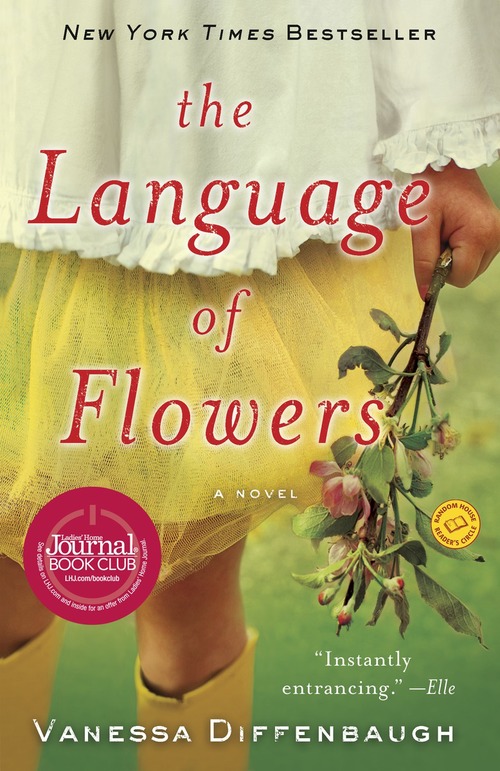
I am an avid audio book listener, given the commutes in Atlanta, and frequently choose books I would not necessarily buy, but the title or the jacket blurb intrigues me. I recently listened to The Language of Flowers by Vanessa Diffenbaugh. the language of flowersThe characters use flowers to express their feelings, a practice that began in the Victorian era when flower dictionaries were popular. The main character in the novel, Victoria, and the author develop their own flower dictionaries, each discovering that flowers could have multiple meanings and unhappy with those available.  In the novel, there is an exchange between Victoria and Grant, her love interest, where the two trade flowers back and forth, she to keep him at bay; he to draw her closer. Gradually, Victoria realizes she has a gift and develops a wedding flowers business centered around each bride and groom’s hopes for their marriage using the flowers chosen to convey this sentiment. Is it the flowers or the talking through of the bride and groom’s view of marriage in the presence of a neutral party that helps the couples? The reader wonders. The language the author uses is vibrant and rich, the characters so well drawn I became quite irritated with Victoria at one point in the story when I felt she made several wrong choices.

So when you pick flowers for this Valentine’s Day, pause to consider the message. Did you pick yellow roses thinking friendship when you are suggesting infidelity? A white rose because you liked the color when you are saying instead you have a heart unacquainted with love? Do you like violets? Do you really consider yourself only of modest worth?

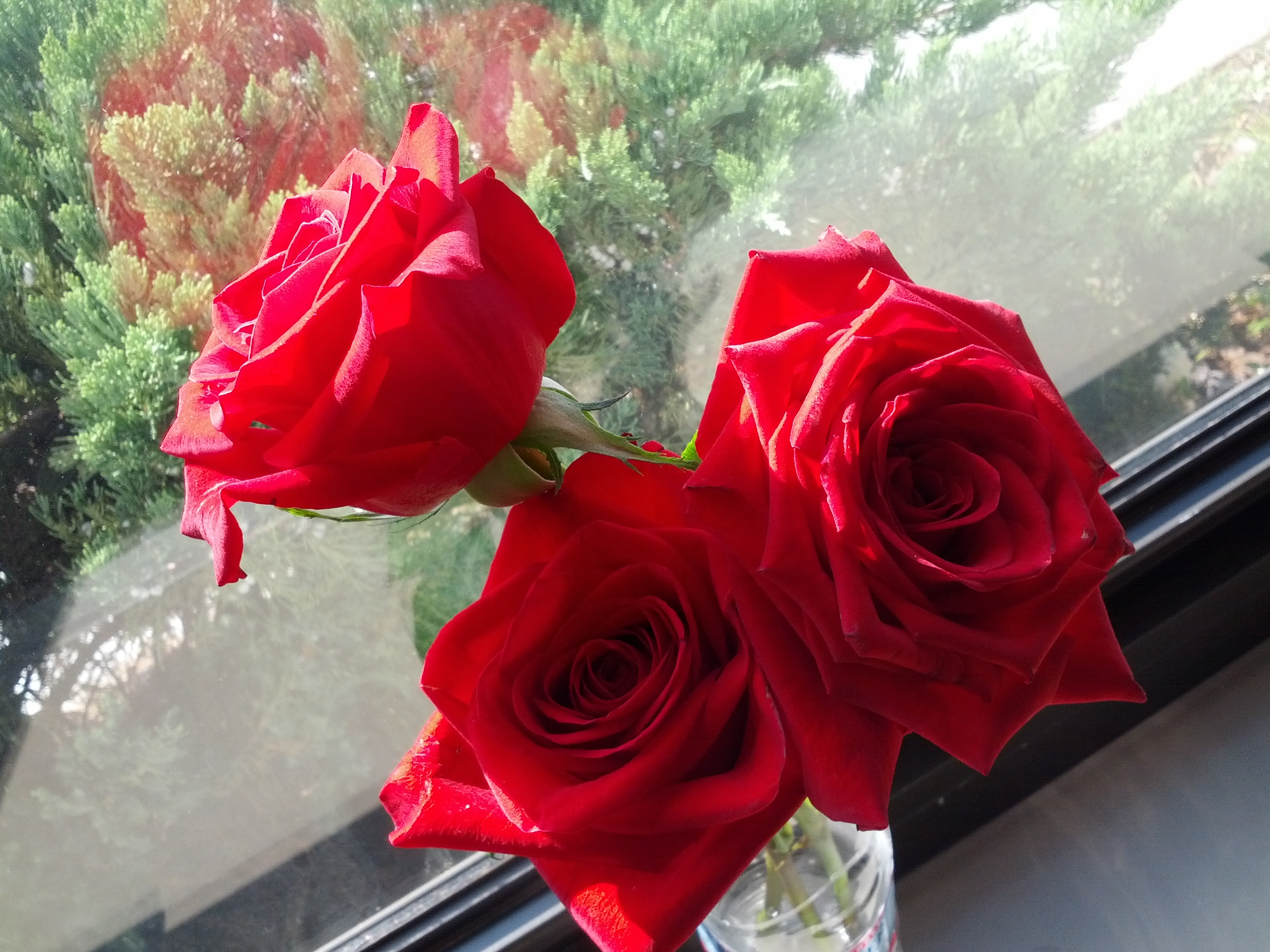
I love flowers. My favorites are red (love) and pink (grace) roses and tulips (declaration of love). If I get yellow or red carnations or nettles, I will know to beware.

2013-10-13 11.25.39                     pink-rose-100432                pink-tulips-100231308

Vanessa Diffenbaugh’s Flower Dictionary

About Flowers

The Language of Flowers